
Creative Commons (CC) licenses are standardized copyright licenses that creators use to clearly communicate how others may use, share, adapt, or build upon their work. These licenses remove ambiguity around permissions and make it easier to legally reuse educational and creative materials. All CC licenses allow:
Additionally, each CC license adds specific conditions that users must follow. You can learn more on the Creative Commons website.
Since the majority of OER materials are released under Creative Commons licenses, understanding how these licenses work is important. If you create an adaptation, you may also be obligated—or may choose—to publish your updated version with a CC license.
| Symbol | License Description |
|---|---|
 |
This license enables reusers to distribute, remix, adapt, and build upon the material in any medium or format, so long as attribution is given to the creator. The license allows for commercial use. |
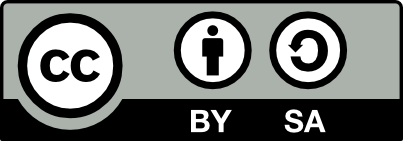 |
This license enables reusers to distribute, remix, adapt, and build upon the material in any medium or format, so long as attribution is given to the creator. The license allows for commercial use. If you remix, adapt, or build upon the material, you must license the modified material under identical terms. |
 |
This license enables reusers to distribute, remix, adapt, and build upon the material in any medium or format for noncommercial purposes only, and only so long as attribution is given to the creator. |
 |
This license enables reusers to distribute, remix, adapt, and build upon the material in any medium or format for noncommercial purposes only, and only so long as attribution is given to the creator. If you remix, adapt, or build upon the material, you must license the modified material under identical terms. |
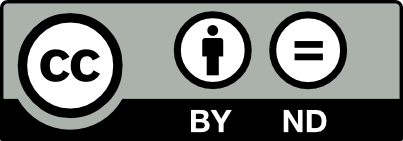 |
This license enables reusers to copy and distribute the material in any medium or format in unadapted form only, and only so long as attribution is given to the creator. The license allows for commercial use. |
 |
This license enables reusers to copy and distribute the material in any medium or format in unadapted form only, for noncommercial purposes only, and only so long as attribution is given to the creator. |
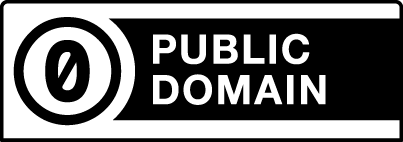 |
CC0 (aka CC Zero) is a public dedication tool, which enables creators to give up their copyright and put their works into the worldwide public domain. CC0 enables reusers to distribute, remix, adapt, and build upon the material in any medium or format, with no conditions. |
When using or sharing an unmodified work released under a CC license, use the attribution format below. If attributing online, add hyperlinks where appropriate.
Format:
"Title of work" by Author is licensed under CC License.
Example:
“Combination of chilies” by City Foodsters is licensed under CC BY 2.0.
When applying a CC license to your own original work, you can use the format below or use the CC License Chooser to generate a license for you automatically.
Format:
"Title of Work" © Year by Your Name is licensed under CC License.
Example:
"Introduction to College Research" © 2023 by Walter Butler is licensed under CC BY 4.0.
When you adapt or revise a work released under a Creative Commons license, you are often required to apply a CC license to your modified version. This means licensing your updated work and giving appropriate attribution to the original creator. If attributing online, add hyperlinks as appropriate.
Format:
"Title of Revised Work" is adapted from "Title of Original Work" by Original Author Name, licensed under CC License. "Title of Revised Work" © Year by Your Name is licensed under CC License.
Example:
"College Research" is adapted from "Introduction to College Research" by Walter Butler, licensed under CC BY-SA 4.0. "College Research" © 2025 by Jane Doe is licensed under CC BY-SA 4.0.